





Satellite data show at least 27 new rare earth mines have opened across Laos since 2022, mostly in protected areas and many within the Mekong River Basin, raising transboundary pollution risks for Vietnam and the wider Mekong system.
Though rare earth mining is banned in Laos, operations — often funded by Chinese investors — continue under local-level permissions, reflecting weak oversight and growing Chinese influence as Laos seeks to boost its resource exports.
Past incidents of chemical spills and fish die-offs have already harmed communities in northern and northeastern Laos, yet limited press freedom and civic space mean contamination and environmental impacts remain largely unreported and unmonitored.
Experts warn that a rare earth mining boom could have severe ecological and social consequences, including deforestation, loss of livelihoods, and toxic pollution, with local communities powerless against unregulated mining backed by local elites and foreign capital.
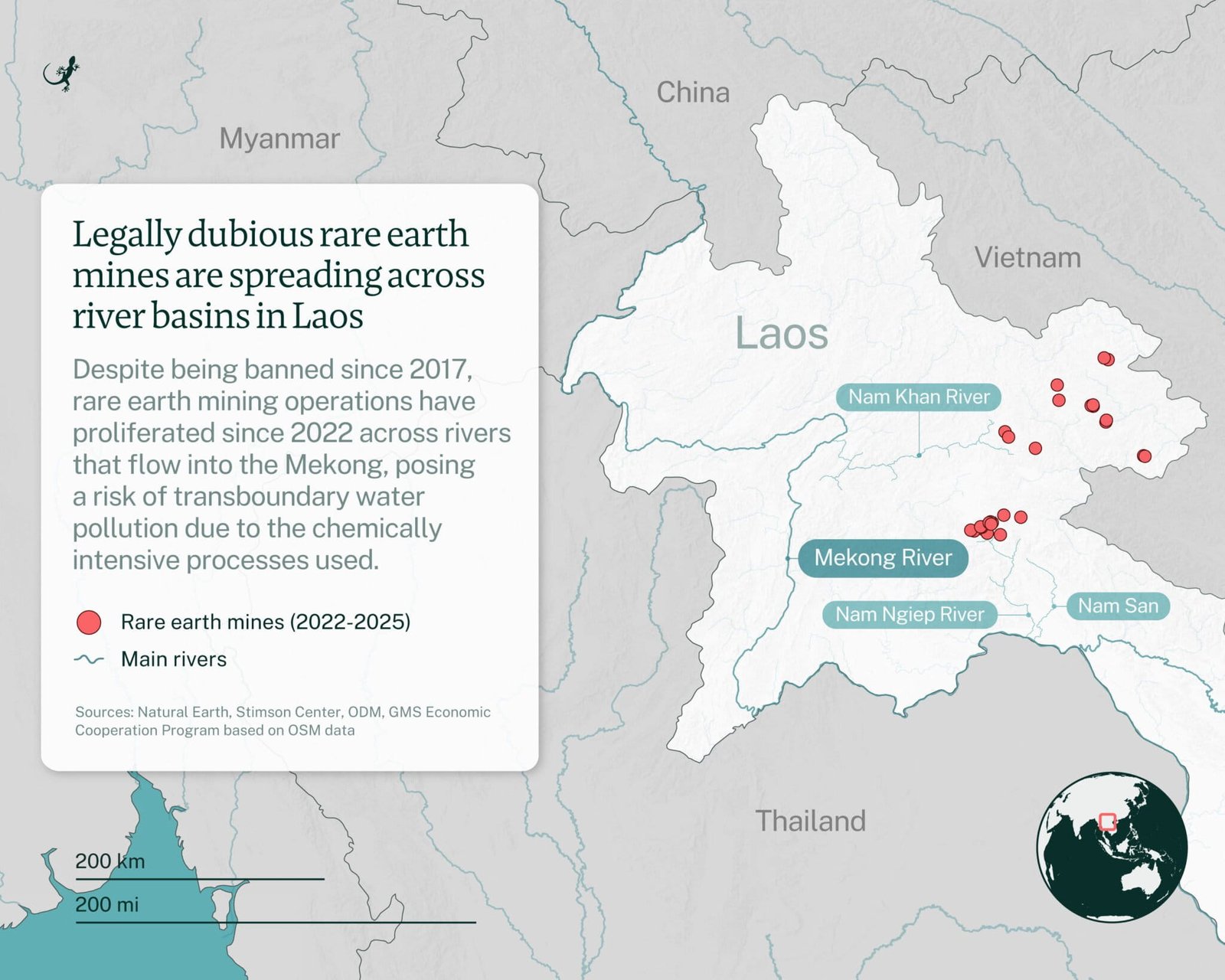
New data show a recent proliferation of rare earth mines across river basins in Laos, potentially posing a transboundary water pollution threat to Vietnam and the entire Mekong River system. The new findings suggest that Chinese demand for rare earth minerals has led to the industry’s expansion into Laos, even though rare earth mineral extraction is currently illegal there.
Research from U.S.-based think tank the Stimson Center has identified 27 rare earth mines that have opened across river basins in Laos since 2022, including seven identified via satellite imagery analysis as having opened this year. Twenty-three of these mines appear to be in protected areas, but it’s unclear whether or not they’re operating with permission from officials.
Fifteen of these mines are operating within the Mekong River Basin: 12 on the Nam Khan River and three on the Nam Ngiep River, both of which feed into the Mekong, the roughly 4,900-kilometer (3,000-mile) river that flows from Tibet through Myanmar, Thailand, Laos, Cambodia and Vietnam before emptying into the South China Sea. The Mekong River Basin is a biodiversity hotspot that sustains the lives of more than 50 million people who rely on it for food, water and livelihoods.
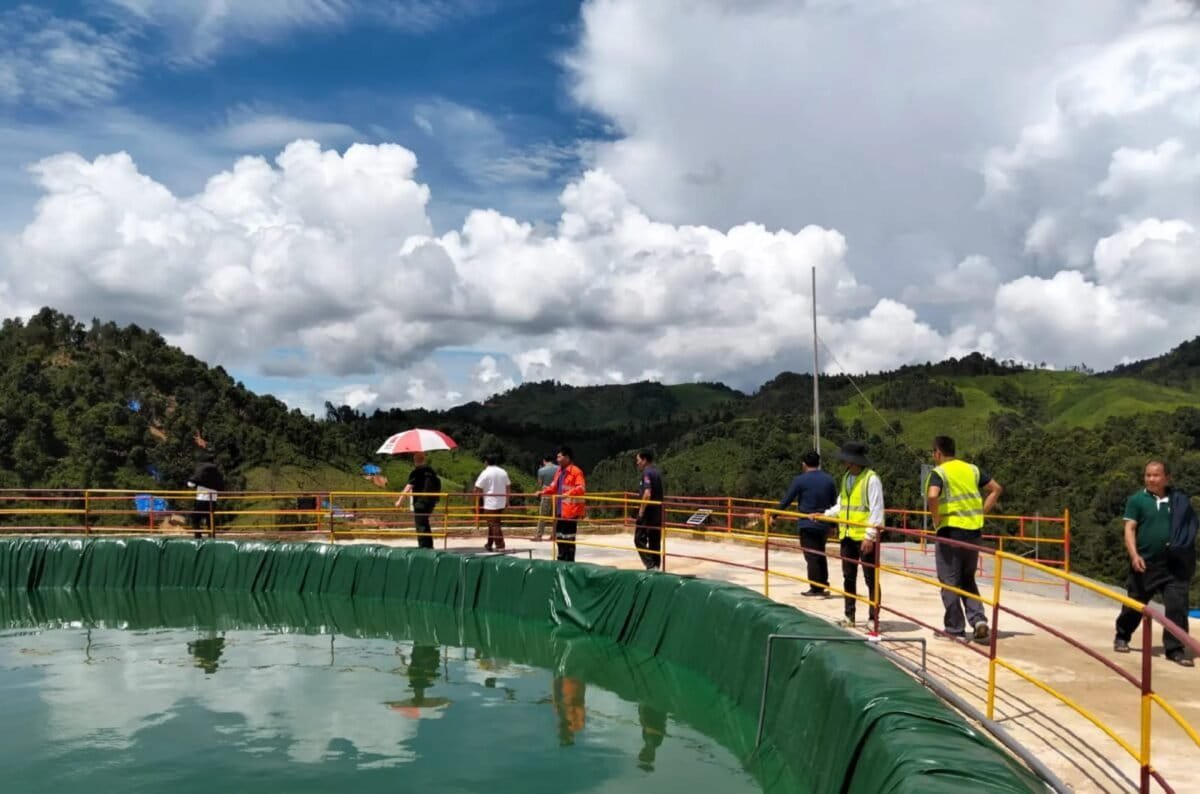
Another 10 rare earth mines were identified by the Stimson Center on the Nam Hao and Nam Xan rivers, in the Ma River Basin, where they not only pose a transboundary risk to Vietnam, but also to the Nam Xam National Biodiversity Conservation Area on the border of Laos and Vietnam, home to the critically endangered northern white-cheeked gibbon (Nomascus leucogenys) and the endangered Asian elephant (Elephas maximus).