






Two Asiatic black bear cubs posted for sale on Facebook have been rescued in Laos as part of an illegal wildlife trade sting.
Free the Bears, an international conservation nonprofit, coordinated the operation with local authorities in Oudomxay province after discovering the Facebook post while monitoring online platforms for wildlife traders.
The advertisement featured two Asiatic black bear (Ursus thibetanus) sisters, roughly 2 months old and weighing less than 3 kilograms (6.6 pounds) each.
“They had been taken illegally from the wild, and sadly their mother was likely killed in the process,” Free the Bears said in a press release.
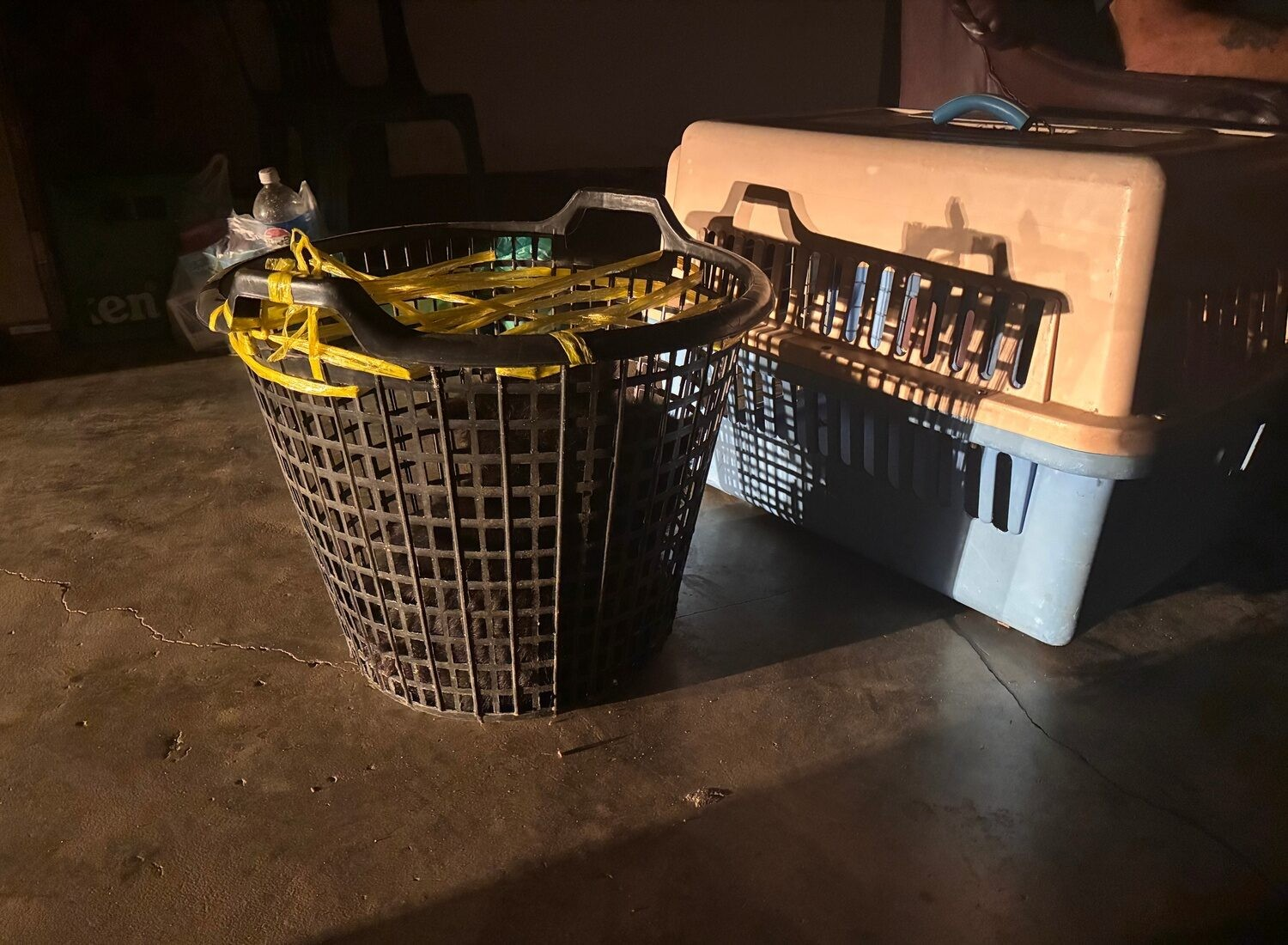
Both cubs, found malnourished and cramped in a plastic washing basket, were rescued within 24 hours of the Facebook post being discovered. They’re now receiving specialist care at the Luang Prabang Wildlife Sanctuary, the nonprofit said.
Matt Hunt, CEO of Free the Bears, told Mongabay by email that the case highlights a dangerous evolution in the illegal wildlife trade.
“In the past, bear cubs would change hands several times before reaching cities or bear farms, from hunters to village middlemen and onto other traders,” Hunt said. “Each time cubs changed hands was an opportunity for law enforcement to intervene. Today, with the rise of social media, hunters in even the most remote forested provinces can directly reach urban buyers through chat groups on platforms like Facebook, WhatsApp, or WeChat.”
Hunt added that this digital shift makes the trade faster and harder to track: Once animals are listed online, they can be moved within hours, requiring law enforcement to adapt rapidly. “It highlights the need for stronger action from platforms to identify and remove illegal wildlife trade at scale,” he said.
A recent joint investigation by Mongabay and independent journalism organization Bellingcat in Indonesia revealed that traders on Facebook groups use codes like “WC” for “wild-caught” and alphanumeric codes to bypass automated moderation.
In 2019, Meta, Facebook’s parent company, banned live animal sales and subsequently participated in the Coalition to End Wildlife Trafficking Online. Yet, online marketplaces continue to be key in the illegal wildlife trade, which appears to be expanding, environmental groups and researchers say.
Data from the Indonesian nonprofit Garda Animalia showed an increase in Facebook advertisements for several threatened species between 2020 and 2025.
In response to the Mongabay and Bellingcat report, Meta recently closed nine Indonesian Facebook groups that were trading wildlife.
The illegal wildlife trade in East Asia and the Pacific is valued at $2.5 billion annually, according to the United Nations Development Programme.
The nature of the organized crime “can evolve faster than the law enforcement system,” Dwi Januanto Nugroho, the Indonesian forestry ministry’s law enforcement chief, previously said.